In the injection molding of optical-grade materials, black spots, flow marks, uneven light transmission, and crystal impurities in products are long-term common challenges faced by most factories.
Many enterprises continuously optimize mold temperature, injection pressure, and injection speed, yet ignore the core crux: the screw surface condition does not meet the requirements of optical injection molding, becoming the key shortcoming restricting the yield rate.
Why are ordinary screws difficult to adapt to optical-grade production? Conventional nitriding screws and ordinary polished screws have congenital deficiencies in optical production conditions:
Insufficient surface finish leads to easy retention of melt in the screw channel and on the screw surface, forming carbon deposits under long-term high temperature, which are brought into products with melt and cause black spots and impurities;
Strong material adhesion leads to easy degradation of residual materials during material change and shutdown restart, causing yellowing and flow marks;
Limited wear and corrosion resistance result in wear debris after long-term operation, further contaminating the melt and damaging the purity and light transmittance of optical products.
Simply put: if the screw is not up to standard, it is difficult to stably produce qualified optical parts even if the subsequent processes are optimized.
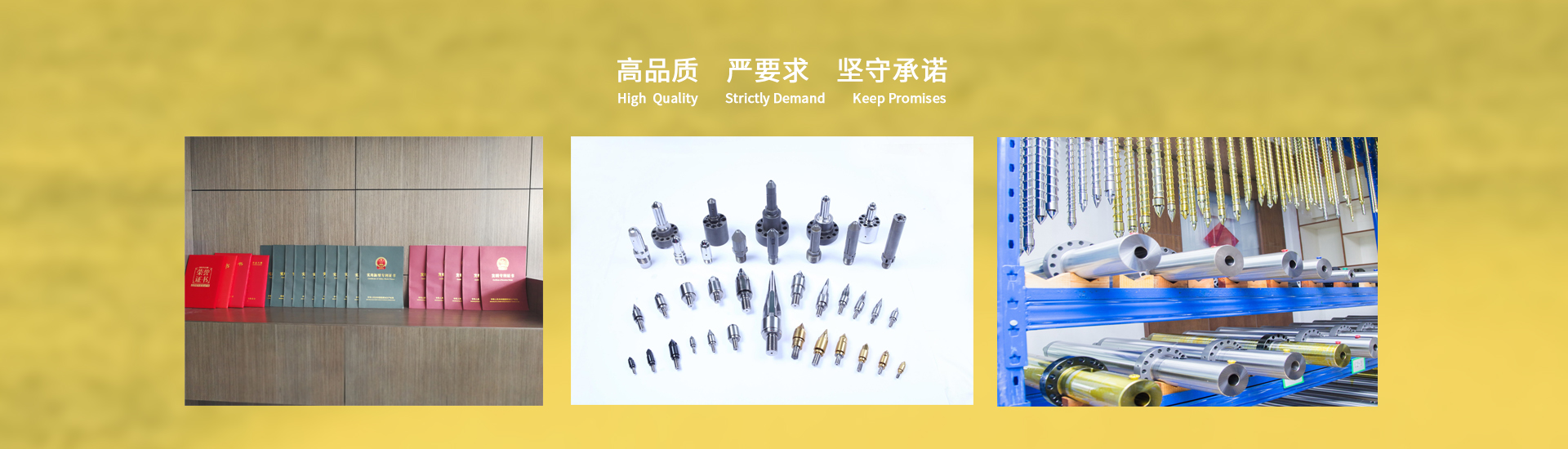
JIKANG Cai-Tao Coated Screw
Custom built for optical injection molding. Core performance (verified in real working conditions):
Cai-Tao Coating: dedicated surface coating treatment with excellent polishing and material-repellent properties, surface roughness ≤ RA0.01, reaching a mirror-smooth state;
Operation performance: fundamentally reduce melt retention and material adhesion, lower the risk of carbon deposition and degradation, and realize stable low-shear plasticization with optimized screw structure.
Targeted solutions to optical production pain points
Eliminate material adhesion and carbon deposition: mirror-smooth surface with no material hanging and no dead corners, no residual material carbonization after shutdown, greatly reduce black spots and crystal points;
Improve light transmission consistency: uniform plasticization without local overheating decomposition, no flow marks or yellowing in products, ensure the light transmittance and appearance integrity of optical parts;
Applicable scenarios
Car lights, lenses, light guides, light guide plates, etc.